Notice: Function _load_textdomain_just_in_time was called incorrectly. Translation loading for the antispam-bee domain was triggered too early. This is usually an indicator for some code in the plugin or theme running too early. Translations should be loaded at the init action or later. Please see Debugging in WordPress for more information. (This message was added in version 6.7.0.) in /www/htdocs/v121347/mobwtal.arne.kamola.de/wordpress/wp-includes/functions.php on line 6260 Mobiles Wuppertal • Bündnis für gemeinwohlorientierte Mobilität
„Mobilität und Verkehr“ sind Schlüsselthemen für ein zukunftsfähige Stadtentwicklung – auch in Wuppertal.
Zukunftsfähige Mobilität in Wuppertal heißt: sich umweltschonend, sozial verträglich und ökonomisch effizient fortzubewegen – auf den alltäglichen Wegen zur Arbeit oder zu Ausbildung und Schule, beim Einkaufen oder in der Freizeit.
Es geht um mehr Mobilität zu Fuß, mit dem Rad und im öffentlichen Verkehr – und um weniger Autoverkehr. Dafür engagieren sich unterschiedliche Akteure in Wuppertal in Politik und Verwaltung, in Wirtschaft und Zivilgesellschaft und in der Wissenschaft. Diese Wege für eine zukunftsfähige Mobilität in Wuppertal sollen in der Veranstaltungsreihe stadtöffentlich vorgestellt und diskutiert werden.
Die Fragen lauten:
Wo kann Straßenraum umverteilt werden?
Wie funktioniert betriebliches Mobilitätsmanagement?
Was ist Mobilitätsglück? Wer vermittelt Mobilitätskultur und
Verkehrswende?
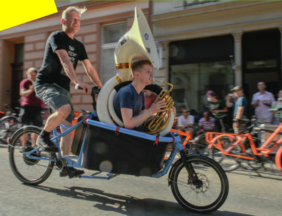
Was bringen Lastenräder?
Welche Mobilität
verlangt der Kapitalismus?
Jeder Veranstaltungstermin greift eine dieser Leitfragen für eine zukunftsfähige Mobilitätsgestaltung in Wuppertal auf und wird von einem Transformationstandem aus Wissenschaft und Praxis gemeinsam gestaltet. Nach den beiden einführenden Vorträgen besteht ausreichend Zeit für die gemeinsame Diskussion. Damit soll ein transdisziplinärer Beitrag für eine zukunftsfähige Mobilität in Wuppertal geleistet werden.
Die erfolgreiche Reihe der Transformationstandems zur zukunftsfähigen Mobilität in Wuppertal aus den Jahren 2016, 2017, 2018 und 2019 wird damit auch im Jahr 2020
fortgesetzt.
Die Veranstaltungen finden an den genannten Dienstagabenden bzw. Mittwochabenden jeweils von 19 Uhr bis 21 Uhr statt.
Gemeinsam mit anderer Initiativen haben wir uns in einem offenen Brief an Verkehrsminister Scheuer für sichere Rad- und Gehwege stark gemacht.
14.04.2020
Zahlreiche Radentscheide und Mobilitätsinitiativen aus ganz Deutschland fordern in offenen Briefen an Verkehrsminister Scheuer und die Verkehrsminister der Länder, unverzüglich pandemietaugliche Infrastruktur für den Fuß- und Radverkehr deutschlandweit zu ermöglichen.
Bild: Frank Masurat; https://qimby.net
Abstand halten ist das Gebot der Stunde, um die Ausbreitung des Coronavirus zu verlangsamen. Die Menschen kommen dieser Anforderung mit großer Mehrheit und Solidarität nach und steigen aufs Rad um oder gehen zu Fuß. Der empfohlene Mindestabstand von 1,5 bis 2 Metern ist im Alltagsverkehr jedoch kaum einzuhalten, denn die ohnehin schon zu engen Fuß- und Radwege sind dafür nicht ausgelegt. In einem offenen Brief fordern jetzt zahlreiche Mobilitätsinitiativen, darunter die bundesweite Radentscheid-Bewegung, die Bundesregierung zum Handeln auf, um sichere Mobilität in den kommenden Monaten zu gewährleisten.
Weder Bundes- noch Landesregierungen haben eine einheitliche Vorgehensweise für pandemietaugliche Mobilität empfohlen. Die Notwendigkeit der Umsetzung schneller Krisenmaßnahmen trifft auf unvorbereitete Kommunalverwaltungen, denen rechtssichere Regelungen fehlen, um schnell agieren zu können. Die bundesweite Radentscheid-Bewegung fordert daher die Bundes- und Landesregierungen auf, jetzt mit klaren Vorgaben, wie Leitlinien, aber auch der Beseitigung rechtlicher Unsicherheiten den Kommunen zu helfen, auf die neue Situation reagieren zu können.
„Wir fordern von den Verkehrsministerien Leitfäden vorzulegen, mit denen Kommunen ihre Straßen schnell und einfach an die neuen Gegebenheiten anpassen und mehr Platz für den Rad- und Fußverkehr schaffen können. Wir müssen pandemiegerechte Mobilität sicherstellen – in den kommenden Monaten, bis ein Impfstoff vorhanden ist“, so Thijs Lucas, Sprecher des Radentscheids Stuttgart.
Der Kfz-Verkehr hat in den letzten Wochen massiv abgenommen. Während die Auto-Fahrbahnen leer sind, gefährden sich Menschen gegenseitig auf viel zu engen Geh- und Radwegen. Die bestehenden Richtlinien zur Planung und Regelung von Verkehr setzen den Fokus auf Autoverkehr. Diesen Fokus in der Krise auf Rad- und Fußverkehr umzustellen ist ein wichtiger Schritt zur Reduzierung der Neuinfektionen.
„Umfassende Gesundheitspolitik bedeutet auch, den Menschen einen sicheren Weg zum Einkaufen oder zur Arbeit zu ermöglichen – selbst bei Ausgangsbeschränkungen und Kontaktverbot. Gerade in Zeiten von Homeoffice und eingeschränkter Bewegungsfreiheit ist es zudem notwendig, dass Menschen ihre tägliche Bewegung im Wohnumfeld durchführen können, um ihre Gesundheit zu erhalten. Hierfür die Voraussetzungen zu schaffen ist wichtige Aufgabe der bundesdeutschen Gesundheitspolitik“, so Joachim Bick von von der IG Fahrradstadt Münster.
Das Auto als individuelle Lösung stellt keine Alternative dar. Würden nach der Lockerung der Kontaktbeschränkungen alle ihre Wege im Pkw erledigen, käme niemand voran. Das Ergebnis wären unendlich lange Staus. Fortbewegung mit dem Rad und zu Fuß ist – wie vom Gesundheitsministerium empfohlen – die einzig wirklich pandemieresiliente Mobilität. Vor allem für Pendler*innen müssen alternative Lösungen zum Pkw zur Verfügung stehen, sonst droht ein Verkehrskollaps in den Städten.
„Verbreiterte Rad- und Gehwege sind schnell und einfach einzurichten, wenn die Bedingungen einmal geklärt sind“,erklärt Ragnhild Sørensen von Changing Cities aus Berlin. „Mit Maßnahmen wie temporären Radstreifen – auch ‚Pop-Up-Bikelanes‘ genannt – macht Berlin erste wichtige Erfahrungen in Friedrichshain-Kreuzberg, die sich auch in der Petition #FaireStraßen wiederfinden. Die Senatsverwaltung um Regine Günther teilt ihre Erfahrung bereits mit anderen Städten. Insbesondere die juristische Absicherung steht dabei im Vordergrund. Die Schaffung bundeseinheitlicher Leitlinien könnte dabei enorm Entwicklungszeit sparen und so auch zur Eindämmung des Virus beitragen“.
Die Radentscheid-Initiativen fordern, jetzt einfache und schnell umsetzbare Lösungen zu schaffen. Regelungen, die einem sicheren Rad- und Fußverkehr im Wege stehen, sollten kurzfristig beseitigt werden.
Die bundesweite Bewegung der Radentscheide aus mehr als 30 Initiativen sowie der Verein Changing Cities und andere zivilgesellschaftliche Initiativenfordern in ihrem offenen Brief Regelungen zur einfachen Umsetzung verschiedener Maßnahmen auf kommunaler Ebene.
Der offene Brief an Bundesminister Scheuer kann hier abgerufen werden.
Abstand halten ist das Gebot der Stunde. Was in der Coronakrise an der Supermarktkasse inzwischen ganz gut funktioniert, stellt Radpendelnde sowie Bürgerinnen und Bürger, die nach Bewegung suchen, vor neue Herausforderungen.
“Wir erleben aktuell eine deutliche Zunahme des Radverkehrs. Der ÖPNV steht nur noch eingeschränkt zur Verfügung. Viele Menschen weichen jetzt erstmalig auf das Fahrrad aus” stellt Lorenz Hoffmann Gaubig vom ADFC fest. “Die Nordbahntrasse hat Ihre Kapazitätsgrenze bereits erreicht. Jetzt wird es Zeit, freie Kapazitäten auf der B7 zu nutzen.” Durch ihre zentrale Tallage werden großeTeile der Kernstadt erschlossen sowie die Innenstädte von Barmen und Elberfeld direkt miteinander verbunden.
Wenn man das Ziel der Fahrradstadt 2025 ernst nimmt, muss man die jetzige Krise als Chance für eine Veränderung der städtischen Mobilität nutzen.
In den letzten Wochen hat der Radverkehr bei gleichzeitig deutlicher Abnahme des Autoverkehrs bereits massiv zugenommen. “Leider fahren die verbleibenden Autofahrenden nun aber deutlich schneller”, beobachtet Kirsten Haberer von der IG Fahrradstadt. “Radfahrende erleben dies als beängstigend und weichen vermehrt auf Gehwege aus. Damit verschlechtert sich aber ihre eigene Verkehrssicherheit und die der zu Fuß Gehenden.”
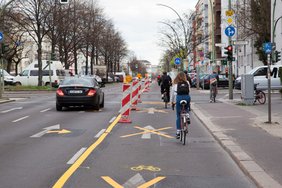
Daher fordern die Wuppertaler Verkehrsinitiativen in Ihrem offenen Brief an Oberbürgermeister Mucke die Einrichtung eines provisorischen Radweges auf der B7, vorzugsweise in Form einer „Protected BikeLane“. Eine gerechte Flächenaufteilung der Verkehrsarten und mehr sicherer Raum für Radfahrende in Form einer Umweltspur wurde bereits 2016 von der IG Fahrradstadt gefordert.
“Ein provisorischer Radweg auf der B7 wird die Nordbahntrasse entlasten. Er lässt sich schnell und kostengünstig mit einer einfachen Markierung und Baken einrichten. Auch Pendlerinnen und Menschen, die an den Hauptverkehrsstrassen leben und nach Bewegungsräumen suchen, werden diese Möglichkeit dankbar annehmen. Verkehrsfluss und Verkehrssicherheit werden sich für alle Verkehrsteilnehmerinnen insgesamt verbessern”, ist sich Christian Wolter vom Bündnis Mobiles Wuppertal sicher.
In Großstädten sind 63 % der Wege unter 5 km lang. Gerade auf der Talachse spielt auch die sonst als Hemmnis für den Radverkehr häufig angeführte Topografie unserer Stadt keine Rolle. Wuppertal hat die Chance, viel mehr Verkehr auf das Fahrrad zu verlagern, da sind sich die Initiativen einig. “Es mangelt aber an sicherer Infrastruktur” mahnen die Initiatoren in Ihrem Schreiben an der Oberbürgermeister.
Jörg Werbeck vom VCD Bergisch Land ergänzt, dass “bei einer stufenweisen Rücknahme der Kontaktbeschränkungen und Öffnung erster Geschäfte sich die Zunahme des Radverkehrs auch positiv auf die Reaktivierung des lokalen Einzelhandels auswirken und diesen nachhaltig unterstützen wird. Dies zeigen Erfahrungen aus anderen Städten ganz klar.”
There are many different ways to use the web besides a mouse and a pair of eyes. Users navigate for example with a keyboard only or with their voice.
All the functionality, including menus, links and forms should work using a keyboard only. This is essential for all assistive technology to work properly. The only way to test this, at the moment, is manually. The best time to test this is during development.
How to keyboard test:
Tab through your pages, links and forms to do the following tests:
Confirm that all links can be reached and activated via keyboard, including any in dropdown submenus.
Confirm that all links get a visible focus indicator (e.g., a border highlight).
Confirm that all form input fields and buttons can be accessed and used via keyboard.
Confirm that all interactions, buttons, and other controls can be triggered via keyboard — any action you can complete with a mouse must also be performable via keyboard.
Confirm that focus doesn’t move in unexpected ways around the page.
Confirm that using shift+tab to move backwards works as well.
The HTML <blockquote> Element (or HTML Block Quotation Element) indicates that the enclosed text is an extended quotation. Usually, this is rendered visually by indentation (see Notes for how to change it). A URL for the source of the quotation may be given using the cite attribute, while a text representation of the source can be given using the <cite> element.
multiple contributors – MDN HTML element reference – blockquote
These tests are a big deal, but this tag is no longer supported in HTML5.
Cite Tag
„Code is poetry.“ —Automattic
Code Tag
This tag styles blocks of code. .post-title {
margin: 0 0 5px;
font-weight: bold;
font-size: 38px;
line-height: 1.2;
and here's a line of some really, really, really, really long text, just to see how it is handled and to find out how it overflows;
}
You will learn later on in these tests that word-wrap: break-word; will be your best friend.
Delete Tag
This tag will let you strike out text, but this tag is recommended supported in HTML5 (use the <s> instead).
Emphasize Tag
The emphasize tag should italicizetext.
Horizontal Rule Tag
This sentence is following a <hr /> tag.
Insert Tag
This tag should denote inserted text.
Keyboard Tag
This scarcely known tag emulates keyboard text, which is usually styled like the <code> tag.
Preformatted Tag
This tag is for preserving whitespace as typed, such as in poetry or ASCII art.
The Road Not Taken
Robert Frost


	Two roads diverged in a yellow wood,
	And sorry I could not travel both          (\_/)
	And be one traveler, long I stood         (='.'=)
	And looked down one as far as I could     (")_(")
	To where it bent in the undergrowth;

	Then took the other, as just as fair,
	And having perhaps the better claim,          |\_/|
	Because it was grassy and wanted wear;       / @ @ \
	Though as for that the passing there        ( > º < )
	Had worn them really about the same,         `>>x<<´
	 /  O  \
	And both that morning equally lay
	In leaves no step had trodden black.
	Oh, I kept the first for another day!
	Yet knowing how way leads on to way,
	I doubted if I should ever come back.

	I shall be telling this with a sigh
	Somewhere ages and ages hence:
	Two roads diverged in a wood, and I—
	I took the one less traveled by,
	And that has made all the difference.


	and here's a line of some really, really, really, really long text, just to see how it is handled and to find out how it overflows;
Welcome to image alignment! The best way to demonstrate the ebb and flow of the various image positioning options is to nestle them snuggly among an ocean of words. Grab a paddle and let’s get started.
On the topic of alignment, it should be noted that users can choose from the options of None, Left, Right, and Center. In addition, they also get the options of Thumbnail, Medium, Large & Fullsize. Be sure to try this page in RTL mode and it should look the same as LTR.
The image above happens to be centered.
The rest of this paragraph is filler for the sake of seeing the text wrap around the 150×150 image, which is left aligned.
As you can see the should be some space above, below, and to the right of the image. The text should not be creeping on the image. Creeping is just not right. Images need breathing room too. Let them speak like you words. Let them do their jobs without any hassle from the text. In about one more sentence here, we’ll see that the text moves from the right of the image down below the image in seamless transition. Again, letting the do it’s thang. Mission accomplished!
And now for a massively large image. It also has no alignment.
The image above, though 1200px wide, should not overflow the content area. It should remain contained with no visible disruption to the flow of content.
And we try the large image again, with the center alignment since that sometimes is a problem. The image above, though 1200px wide, should not overflow the content area. It should remain contained with no visible disruption to the flow of content.
And now we’re going to shift things to the right align. Again, there should be plenty of room above, below, and to the left of the image. Just look at him there… Hey guy! Way to rock that right side. I don’t care what the left aligned image says, you look great. Don’t let anyone else tell you differently.
In just a bit here, you should see the text start to wrap below the right aligned image and settle in nicely. There should still be plenty of room and everything should be sitting pretty. Yeah… Just like that. It never felt so good to be right.
And just when you thought we were done, we’re going to do them all over again with captions!
The image above happens to be centered. The caption also has a link in it, just to see if it does anything funky.
Bigger caption than the image usually is.
The rest of this paragraph is filler for the sake of seeing the text wrap around the 150×150 image, which is left aligned.
As you can see the should be some space above, below, and to the right of the image. The text should not be creeping on the image. Creeping is just not right. Images need breathing room too. Let them speak like you words. Let them do their jobs without any hassle from the text. In about one more sentence here, we’ll see that the text moves from the right of the image down below the image in seamless transition. Again, letting the do it’s thang. Mission accomplished!
And now for a massively large image. It also has no alignment.
Comment for massive image for your eyeballs.
The image above, though 1200px wide, should not overflow the content area. It should remain contained with no visible disruption to the flow of content. This massive image is centered.
And again with the big image centered. The image above, though 1200px wide, should not overflow the content area. It should remain contained with no visible disruption to the flow of content.
Feels good to be right all the time.
And now we’re going to shift things to the right align. Again, there should be plenty of room above, below, and to the left of the image. Just look at him there… Hey guy! Way to rock that right side. I don’t care what the left aligned image says, you look great. Don’t let anyone else tell you differently.
In just a bit here, you should see the text start to wrap below the right aligned image and settle in nicely. There should still be plenty of room and everything should be sitting pretty. Yeah… Just like that. It never felt so good to be right.
And that’s a wrap, yo! You survived the tumultuous waters of alignment. Image alignment achievement unlocked! One last thing: The last item in this post’s content is a thumbnail floated right. Make sure any elements after the content are clearing properly.
This is a paragraph. It should not have any alignment of any kind. It should just flow like you would normally expect. Nothing fancy. Just straight up text, free flowing, with love. Completely neutral and not picking a side or sitting on the fence. It just is. It just freaking is. It likes where it is. It does not feel compelled to pick a side. Leave him be. It will just be better that way. Trust me.
Left Align
This is a paragraph. It is left aligned. Because of this, it is a bit more liberal in it’s views. It’s favorite color is green. Left align tends to be more eco-friendly, but it provides no concrete evidence that it really is. Even though it likes share the wealth evenly, it leaves the equal distribution up to justified alignment.
Center Align
This is a paragraph. It is center aligned. Center is, but nature, a fence sitter. A flip flopper. It has a difficult time making up its mind. It wants to pick a side. Really, it does. It has the best intentions, but it tends to complicate matters more than help. The best you can do is try to win it over and hope for the best. I hear center align does take bribes.
Right Align
This is a paragraph. It is right aligned. It is a bit more conservative in it’s views. It’s prefers to not be told what to do or how to do it. Right align totally owns a slew of guns and loves to head to the range for some practice. Which is cool and all. I mean, it’s a pretty good shot from at least four or five football fields away. Dead on. So boss.
Justify Align
This is a paragraph. It is justify aligned. It gets really mad when people associate it with Justin Timberlake. Typically, justified is pretty straight laced. It likes everything to be in it’s place and not all cattywampus like the rest of the aligns. I am not saying that makes it better than the rest of the aligns, but it does tend to put off more of an elitist attitude.
Putting special characters in the title should have no adverse effect on the layout or functionality.
Special characters in the post title have been known to cause issues with JavaScript when it is minified, especially in the admin when editing the post itself (ie. issues with metaboxes, media upload, etc.).
Latin Character Tests
This is a test to see if the fonts used in this theme support basic Latin characters.
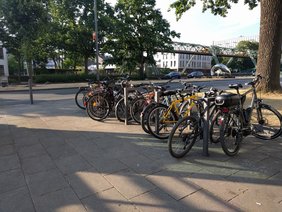


 The rest of this paragraph is filler for the sake of seeing the text wrap around the 150×150 image, which is left aligned.